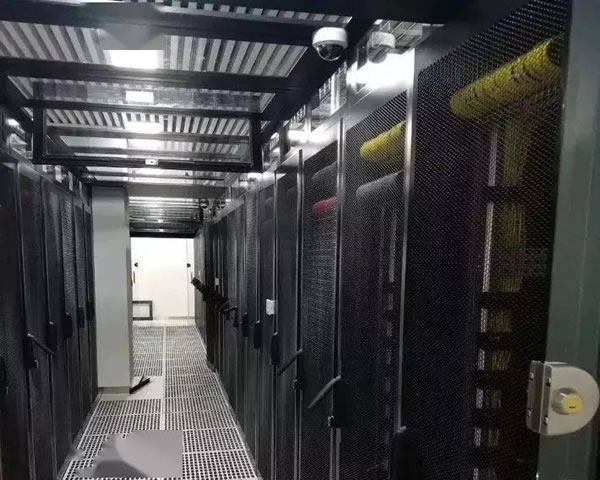
Introduction: High Concurrency and the Optimization Focus of Hong Kong Site Clusters
In high-concurrency scenarios, the type of Hong Kong site cluster server type and bandwidth scheme directly affect response speed, stability, and search engine regional recognition. To balance access experience and GEO optimization, system planning must be made from four dimensions: architecture, link, bandwidth, and protection, ensuring stable and controllable service quality even during traffic peaks.
Overview of server types in Hong Kong site clusters
Common server types include dedicated physical machines, cloud hosts (VPS/cloud instances), and hybrid architectures. Each type focuses on performance, scalability, network quality, and cost control, prioritizing network bandwidth assurance, isolation of IO and CPU resources for high concurrency, and the ability to scale horizontally.
Advantages of independent physical servers in high concurrency
Dedicated physical servers provide stable network bandwidth and resource isolation, suitable for nodes with sustained high concurrency, long connections, or sensitive to latency. For traffic hotspots or key crawling nodes in the cluster, physical functions reduce "neighbor noise," improving single-instance stability and predictability.
Cloud hosts and elastic scaling solutions
Cloud hosts offer advantages such as rapid elastic expansion, geographic distribution, and interface-based management. High-concurrency scenarios can handle sudden traffic through automatic scaling and elastic bandwidth, suitable for projects with large load fluctuations or frequent adjustments in cluster size, but the impact of network jitter and bandwidth sharing on stability needs to be assessed.
Hybrid deployment recommendations (physical + cloud).
Hybrid deployment combines the advantages of physical machines and cloud resources: critical nodes use independent physical servers to ensure stability, while edge or temporary scaling is carried by cloud hosts carrying elastic traffic. This solution strikes a balance between cost and performance, and facilitates dynamic scheduling and optimization based on traffic patterns.
Bandwidth types: Comparison of shared, dedicated, and elastic bandwidth
Shared bandwidth costs are low but affected by neighbors; Dedicated bandwidth ensures peak throughput and stability, suitable for critical sites; Elastic bandwidth supports on-demand scaling, suitable for high-concurrency scenarios with large traffic fluctuations. When selecting, prioritize ensuring stable bandwidth quotas for key nodes.
Methods for estimating bandwidth size
Estimated bandwidth should be based on the number of concurrent connections, average response size, peak ratio, and redundancy safety factor. Available formulas: bandwidth (Mbps) ≈ concurrent connections× average traffic per session (KB) ×8/s÷1024, combined with historical traffic curves to account for two to three times peak redundancy.
Load balancing and traffic scheduling strategies
In the Hong Kong station cluster, local and cross-node load balancing can help distribute concurrency pressure. Combining DNS polling, L4/L7 load balancers, and intelligent routing, it enables session stickiness, health checks, and scheduling by geographic or traffic type, improving availability and optimizing search engine crawling performance.
Conversation strategies and health checks
To avoid single-point congestion, configure health checks, connection pools, and session stickiness strategies. Automatically removes abnormal nodes and redistributes traffic, maintaining overall availability during high-concurrency bursts, while reducing the risk of scraper or user request loss, ensuring SEO crawling continuity.
Key points for optimizing network links and latency
Choose low-latency, reliable international outbound and local backbone links, prioritizing multi-link redundancy with BGP or intelligent routing. For site clusters targeting Greater China or the Asia-Pacific region, optimizing relay nodes and routing can significantly reduce latency and improve the stability of search engines and end user access.
Caching, CDN, and resource distribution are coordinated
Combining edge cache, reverse proxy, and CDN can reduce the bandwidth burden on the origin station and lower response latency. Static resources and cacheable interfaces are distributed via edge nodes, significantly reducing back-source requests in high-concurrency scenarios, improving overall throughput and improving search engine crawling efficiency.
Security and DDoS protection strategies
High-concurrency environments are prone to DDoS and abuse attacks, requiring configuration of bandwidth cleanup, firewall rules, and traffic rate limiting strategies. By integrating local and cloud protection services, it enables traffic classification, anomaly detection, and elastic cleaning to ensure core nodes maintain minimum availability during attacks.
Operation and maintenance monitoring and capacity planning
Continuously monitor bandwidth utilization, connection count, response latency, and error rates, and establish alarm and automated expansion plans. Using historical data for capacity forecasting, regular stress testing, and fault drills, we ensure that the types of Hong Kong server clusters and bandwidth solutions can be promptly adjusted and protected under high concurrency.
GEO and SEO impact assessment
When selecting Hong Kong site cluster server type and bandwidth plan, consider the impact of search engine geographic recognition, IP distribution, and access latency on ranking. Stable, low-latency nodes, reasonable multi-regional deployment, and consistent content strategies help improve local search and cross-regional indexing performance.
Summary and suggestions
For high-concurrency applications, it is recommended to use dedicated physical servers for critical nodes and cloud hosts for elastic scaling, and to configure dedicated or elastic bandwidth to ensure peak throughput. Supplemented by multi-link redundancy, load balancing, edge caching, and DDoS protection, and continuously adjusted based on monitoring data, it can enhance access performance while balancing GEO and SEO optimization goals.
- Latest articles
- How The Operations Team Monitors And Optimizes The Performance And Availability Of VNPs CN2 In Vietnam
- Detailed Guide On How To Achieve Low-latency Matches On The Infinite Rule + Thai Servers
- Analysis Of Stable And Affordable Server Configurations And Cost-effectiveness For Small And Medium-sized Enterprises In Malaysia
- Analysis Of The Advantages Of Choosing US Server Hosting For Enterprises In Cross-border Business
- Case Analysis Of The Types And Upgrade Paths Required By Different Industries For Hong Kong Server Clusters
- Choose And Recommend How US Cloud Server Nodes Evaluate Operator Quality And Bandwidth Stability
- Suggestions For Optimizing Latency For Genie Festival Taiwan Servers And Practical Experience On Stable Connections
- Merchant Announcements, Summary Of Thai Washing Machine Room Prices, Latest Promotions, And Package Descriptions
- Technical Advice On Optimizing Bandwidth Peak And Traffic Billing When Renting A Singapore Server
- How Do Home Users Rate Taiwan Telecom's CN2 Broadband? Overview Of Bandwidth Availability And Service Quality
- Popular tags
-

Suggestions On Communication And Network Bandwidth Configuration For Hong Kong Construction Site Computer Rooms To Improve Project Efficiency
provide computer room communication and network bandwidth configuration recommendations for hong kong construction sites, covering demand assessment, topology design, redundancy and security, equipment interfaces and operation and maintenance strategies to help improve project efficiency and stability. -

Analysis Of Reasons And Advantages Of Choosing Hong Kong Cn2 Vps
this article analyzes the reasons and advantages of choosing hong kong cn2 vps, and discusses its characteristics in terms of network speed, stability and data security. -

How To Set Up A Hong Kong Server On A Smartphone For Sharing With Wi-Fi, Along With Security Precautions
Explains common methods for setting up a phone to share a Hong Kong server over Wi-Fi, configuration steps for iOS/Android, router-based sharing solutions, use cases and security considerations, and provides suggestions for performance optimization and troubleshooting.